



No Cell Tower, No Power, No Problem: Securing Remote Job Sites with Starlink Surveillance

By Jennifer Cisneros, CEO of Advanced Industrial Monitoring. Jen has spent 10 years in remote site security, helping construction, industrial, and mining teams protect hard-to-reach sites.
Some job sites are too far out for decent cell service and possibly too early in the build to have permanent power. Yet you still have the ability to monitor them around the clock. Satellite internet and solar-powered security cameras help you keep an eye on your equipment, access points, and materials without waiting on a cell tower or a grid connection. That kind of visibility and protection for your site is the difference between catching a problem and finding out about it Monday morning.
Your biggest risk on a remote site is the lack of visibility
You already know the equipment on your site can be worth more than the structure going up around it. Excavators, generators, fuel, copper, stockpiled aggregate, all of it sitting somewhere that can be easy to reach for a person looking to benefit from the “remoteness” of the location. Very few people pass near remote sites, so there’s rarely anyone around to notice something suspicious or out of place. Thieves can spend the entire night vandalizing with no hindrance.
Why cellular camera systems let you down out here
Many jobsite security systems run on cellular and that’s fine in a suburb. On a remote site with spotty service and low bandwidth, it’s a huge issue.
Cell signals can be eaten up by distance, terrain, bad weather, even network congestion. A weak bar or two usually isn’t enough bandwidth to keep video surveillance running in a way that can effectively protect your site. The camera might catch some of what happens and miss the rest. Alerts don’t get triggered and sent. Then the one time something happens, the system fights you when you go to pull the footage. Out here, your connection isn’t a detail, it’s the next most important requirement after power.
How Starlink surveillance keeps you connected
Starlink surveillance uses satellite internet to keep your cameras online when cell service is weak, inconsistent, overburdened, or just isn’t there. Instead of depending on a tower that could be miles off, the system runs on a connection made just for these conditions.
For construction and above-ground mining crews, that means you can pull live feeds, get alerts, and review recorded footage. All of this is possible even on an early-phase site, a sprawling pit, or a job an hour from the nearest town. That link between your site, your camera access, and the people watching it stays solid.
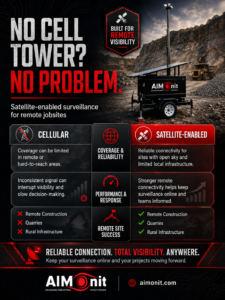
Cellular vs. satellite-enabled surveillance for remote job sites.
Off-grid power without the wait
Getting the proper connectivity is one piece of the system. Power is the other. A lot of remote sites don’t have permanent electrical service in early stages, and some never will.
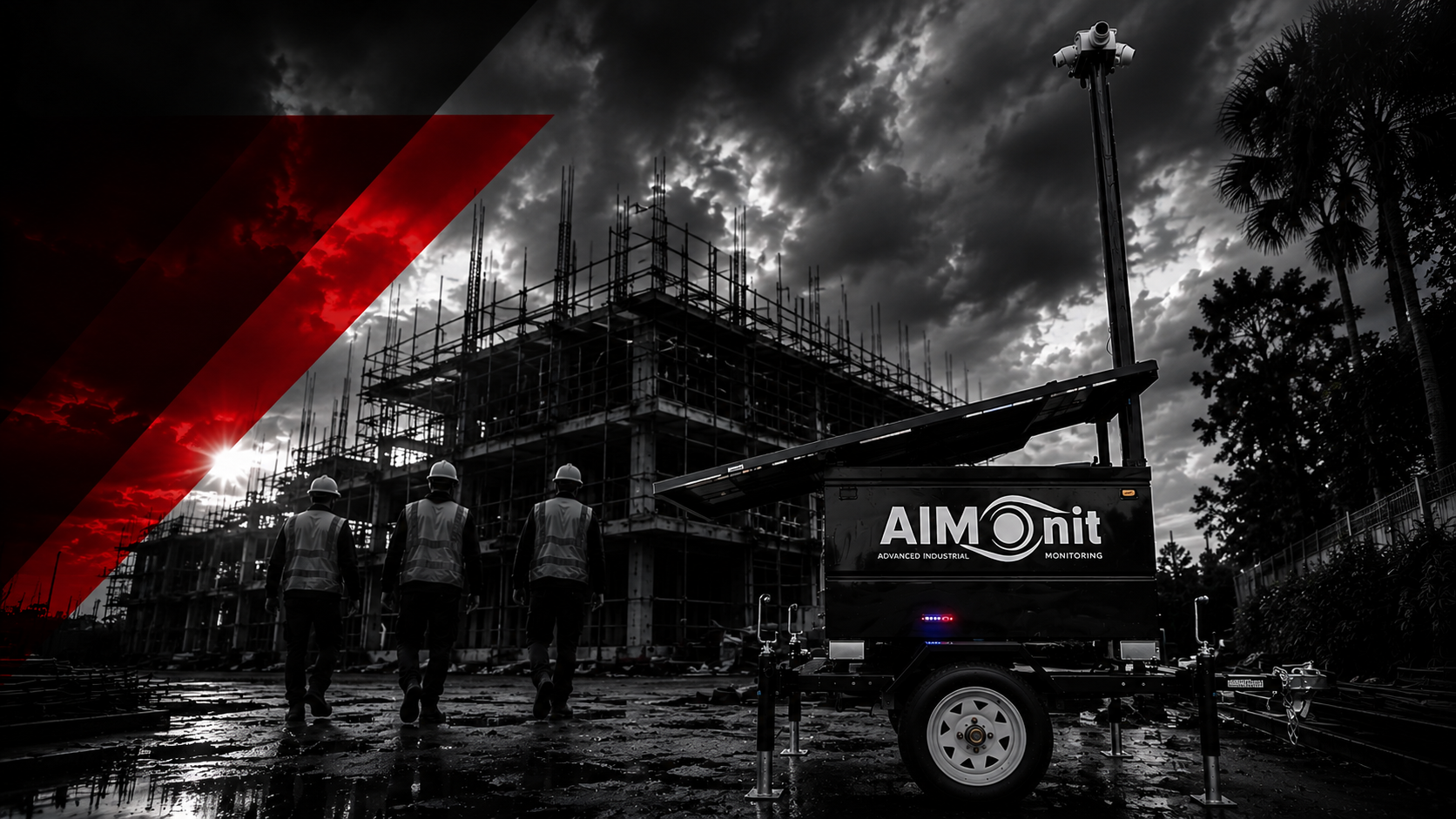
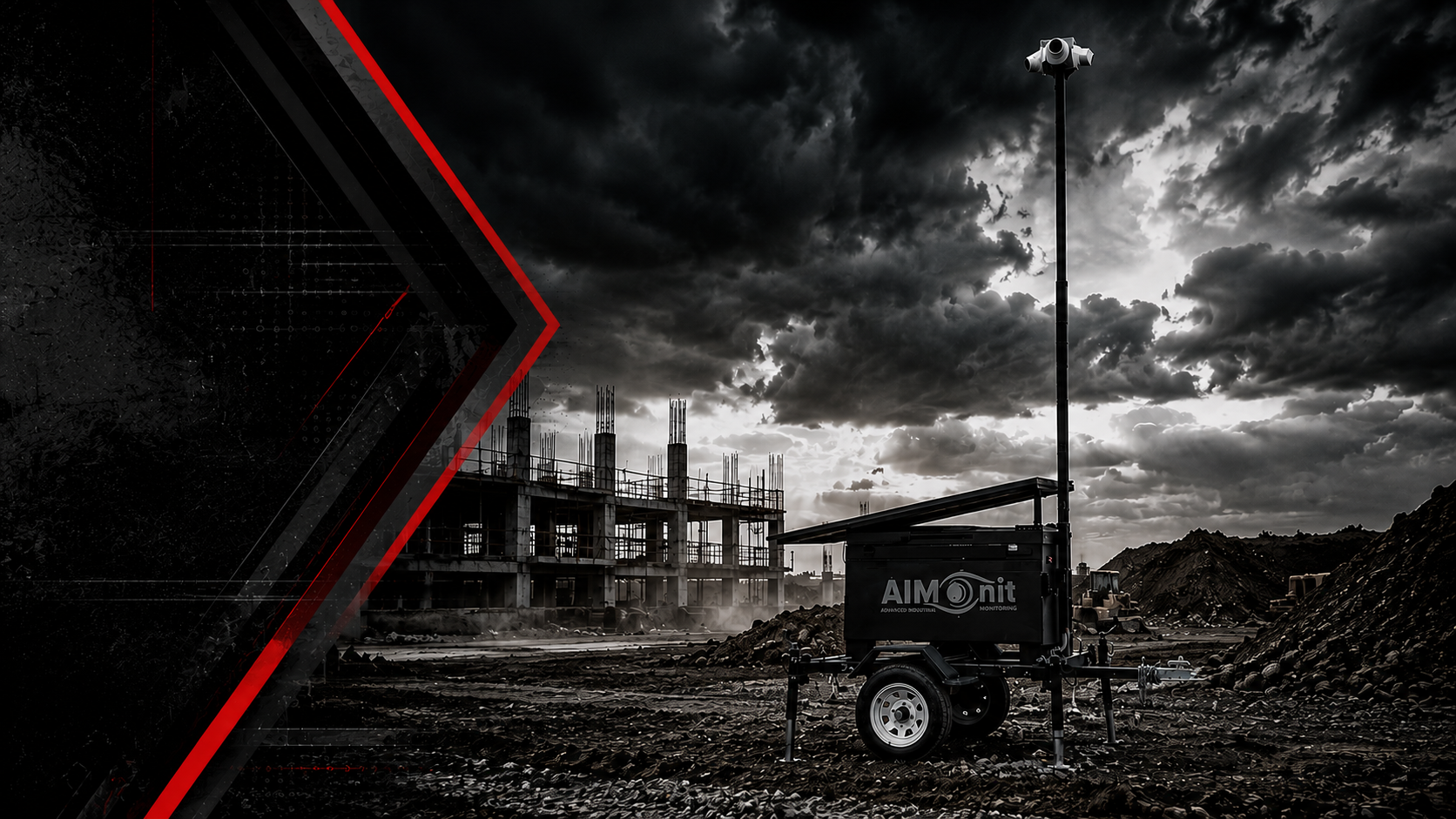
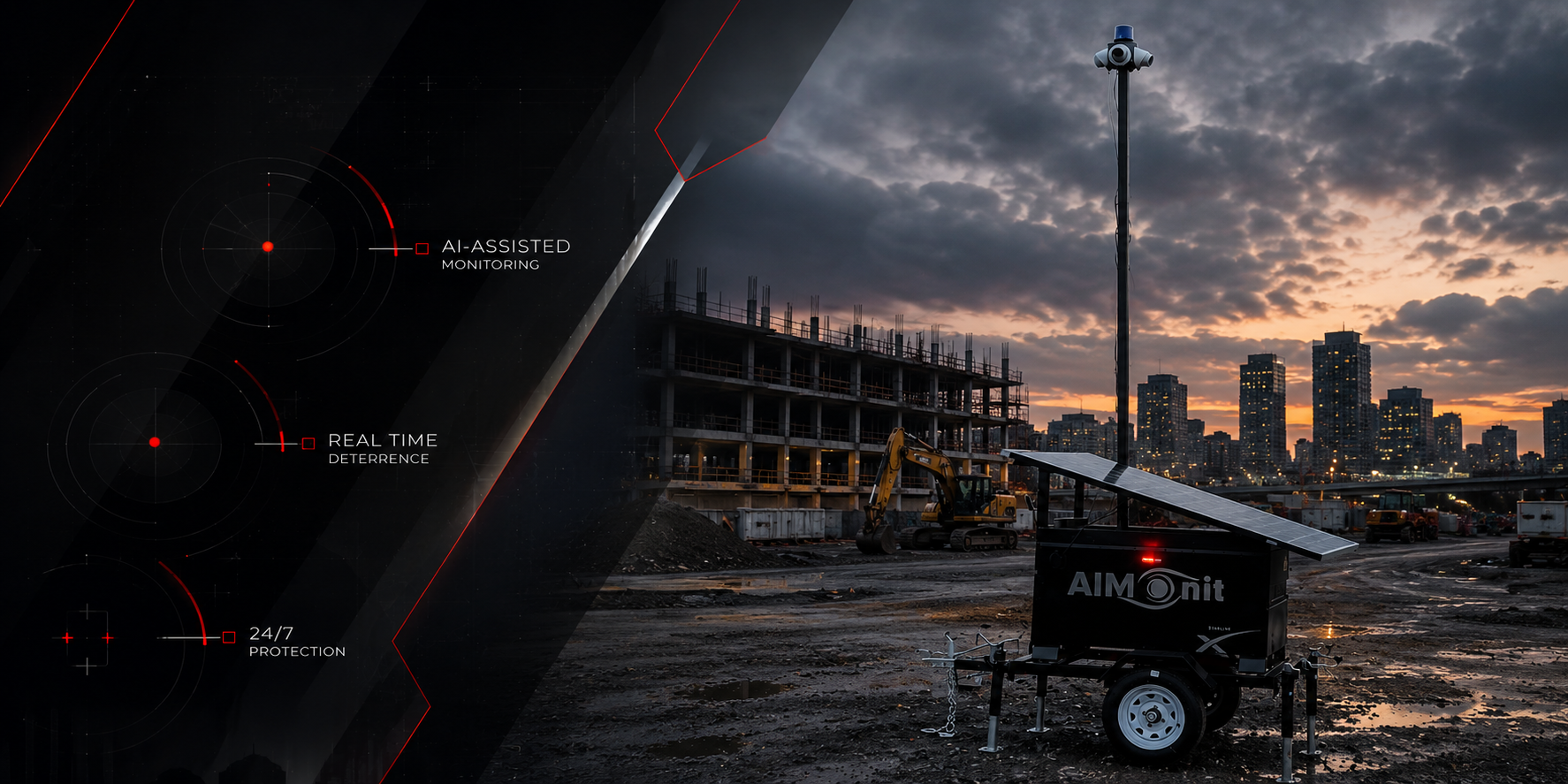
Solar-powered security units let you cover gates, laydown yards, fuel zones, and access roads without trenching in power or worrying about a generator. This allows you to protect site assets from the first day and monitor them 24/7. Run them with satellite connectivity and you’ve got coverage that keeps up with any remote job.
What you actually get with AIM
We built Advanced Industrial Monitoring around how remote sites actually run. Depending on your layout, we’ll cover access points, equipment areas, material storage, fuel zones, and the perimeter. Wherever the risk is, that’s where the units are placed and the cameras watch.
A few things our customers tell us matter most:
- AI-assisted monitoring that flags movement instantly. Someone on site after hours? Our live monitoring team gets the alert and pulls up the entire site to investigate. They aren’t just staring at computer screens for hours with their minds wandering.
- Unlimited free video review. Something happened overnight and you need the footage? We pull it for you with no additional charge. We offer video reviews during working hours too. Employees got hurt, equipment got damaged, materials missing? Just let us know, we’re happy to provide footage.
- Month-to-month service. No long contracts, all-inclusive with no surprise costs. Scale coverage up or down as the project moves through its phases.
- Fast response and a real person when you call, not a ticket queue.
Guards have their place. But on a big property with long overnight hours and access points that keep moving, guards alone get expensive fast, still can’t be everywhere at once, and can usually be counted on for the same site-check pattern. Remote surveillance systems watch the whole site and document everything while they do.
Better visibility, better calls
No security system takes every risk off the table. A good one just means fewer early morning surprises and a lot less wondering about what’s going on at a site you can’t get to. Our combination of solar power and Starlink has helped site managers gain video access to their site and protect it 24/7 in some of the most remote locations.
AIM serves job sites across the entire East Coast of the US and the Caribbean, including New York, New Jersey, Pennsylvania, Delaware, Maryland, Washington, D.C., West Virginia, Virginia, North Carolina, South Carolina, Georgia, Tennessee, and Puerto Rico.
Get in touch with Advanced Industrial Monitoring for a quick demo, and we’ll figure out the right coverage for your site and your budget.
For our services in the Midwest and West Coast, please visit our sister company Jobsite Sentry at jobsitesentry.com.
FAQ
What is Starlink surveillance for remote job sites? It’s a security monitoring setup that uses satellite internet instead of cellular. Your cameras stay connected where cell coverage is weak or missing. It’s perfectly designed for construction, mining, aggregate, infrastructure, and other off-grid sites.
Can jobsite cameras work without reliable cell service? Yes, with a satellite-based system this is 100% possible. It keeps video and alerts running in areas where cellular falls short.
Why use solar-powered surveillance? Solar lets you cover gates, yards, and access points without permanent power or a generator. A must on early-phase builds and any site where the layout keeps shifting.
Does AIM require a long-term contract? No. AIM is month-to-month. No long contracts, no hidden costs, and you can adjust coverage as the project moves from one phase to the next.