



LOWER RISK, BETTER DOCUMENTATION: HOW JOBSITE MONITORING HELPS WHEN AN INSURANCE CLAIM HAPPENS

Reading time: 5–6 minutes
Jennifer Cisneros is the CEO of Advanced Industrial Monitoring and has 10 years of experience in the security and jobsite monitoring industry. She writes about construction site security, remote surveillance, AI-assisted monitoring, and practical ways to protect active, remote, and industrial sites.
Insurance usually becomes part of the conversation after equipment is damaged, materials disappear, or something else has already gone wrong. When that happens, having recorded video and a clear timeline can make it much easier to understand what actually happened and provide documentation when your insurance company, investigator, or internal team asks questions.
Jobsite monitoring cannot guarantee how an insurance claim will turn out, but it can give you something much more useful than a guess about what happened overnight.
How can video monitoring help document a jobsite incident?
Think about what happens when a project manager gets a call first thing in the morning because a gate is damaged and equipment is missing. Before anybody can deal with the insurance side of the incident, someone has to figure out when it happened, what was taken, how someone entered the site, and whether the cameras recorded anything useful.
If you only have a few fixed cameras recording certain parts of the property, finding those answers can be difficult. Construction sites also change constantly, so the camera position that made sense three months ago may be looking at the wrong area today.
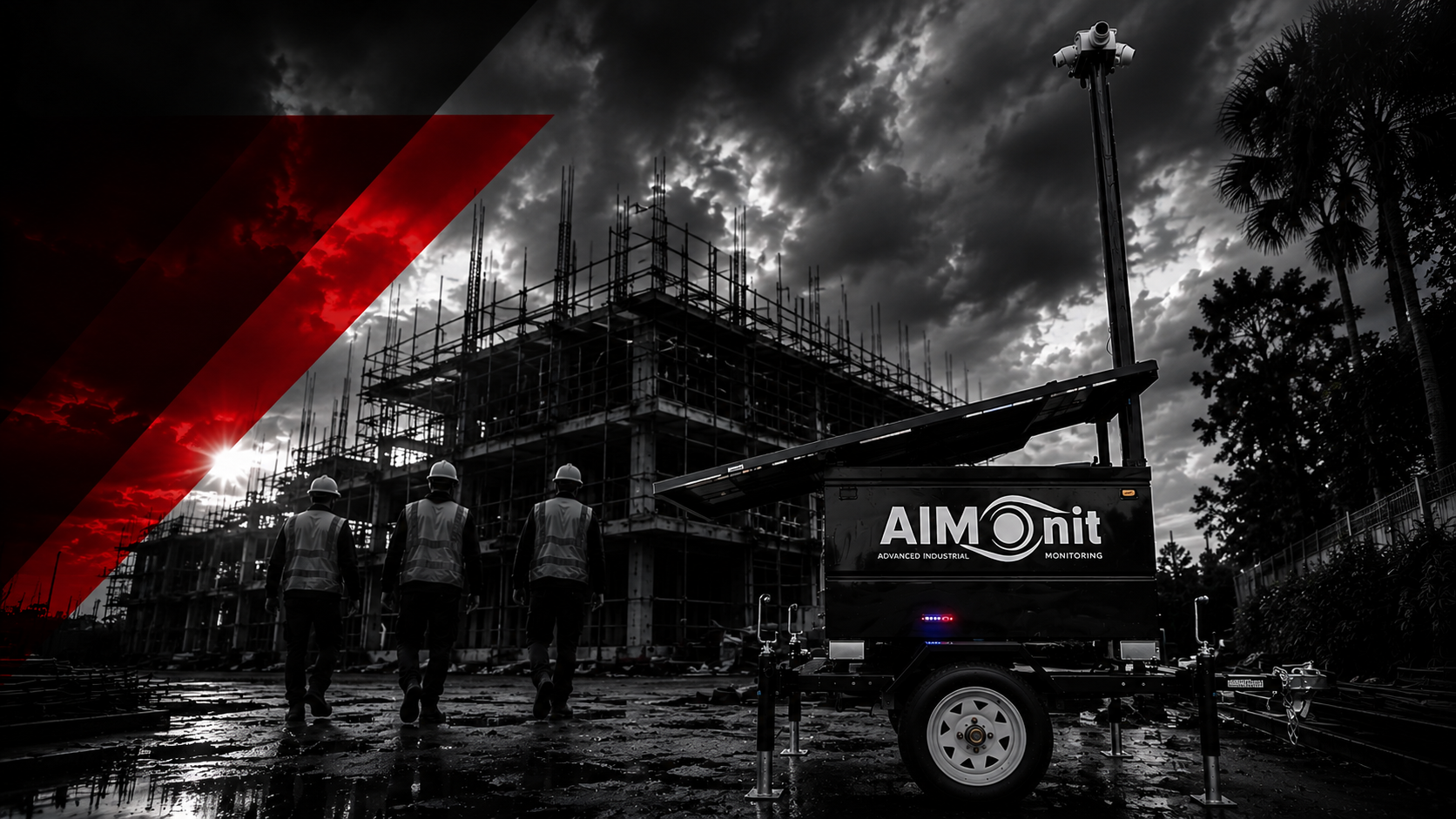
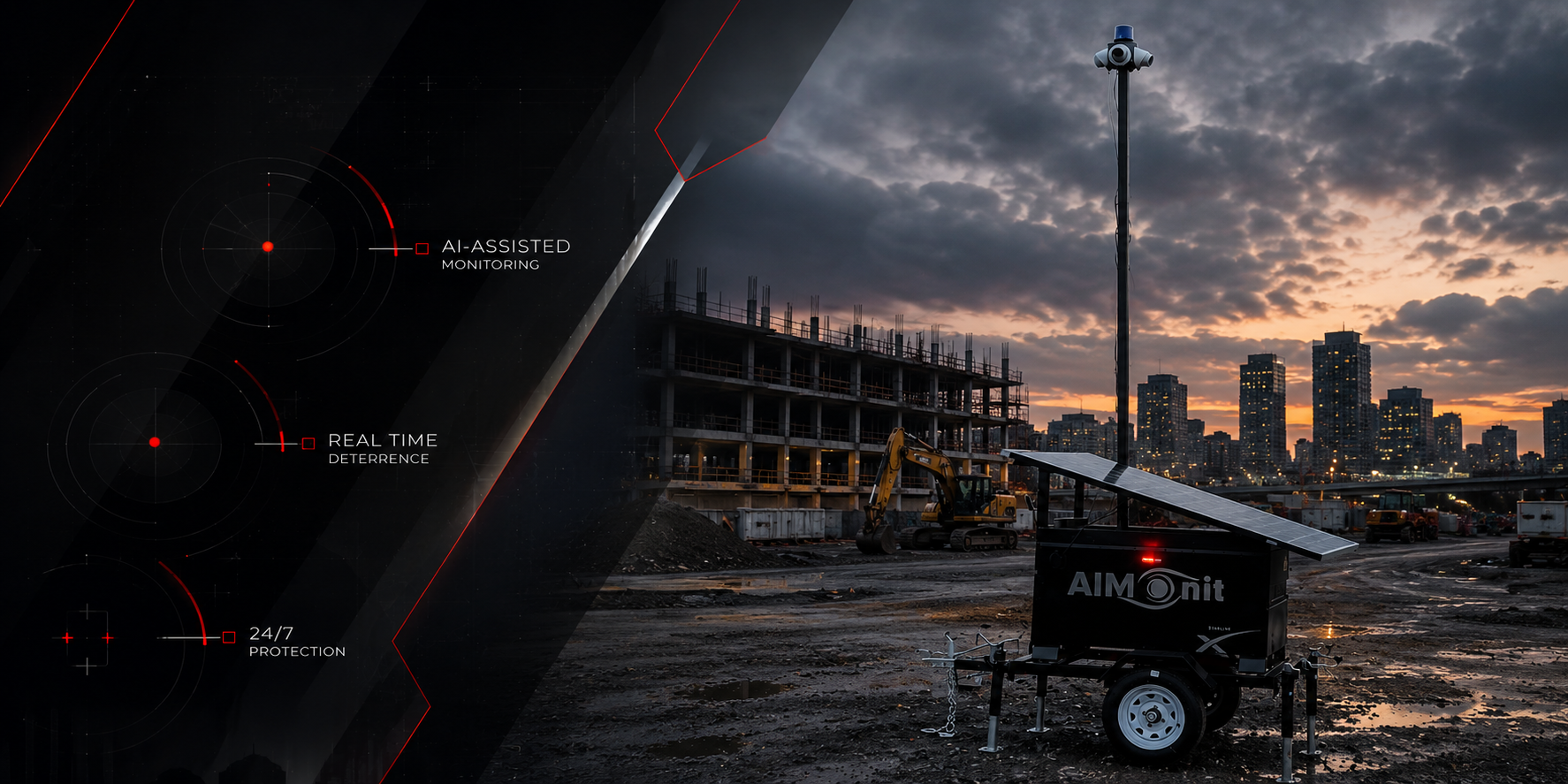
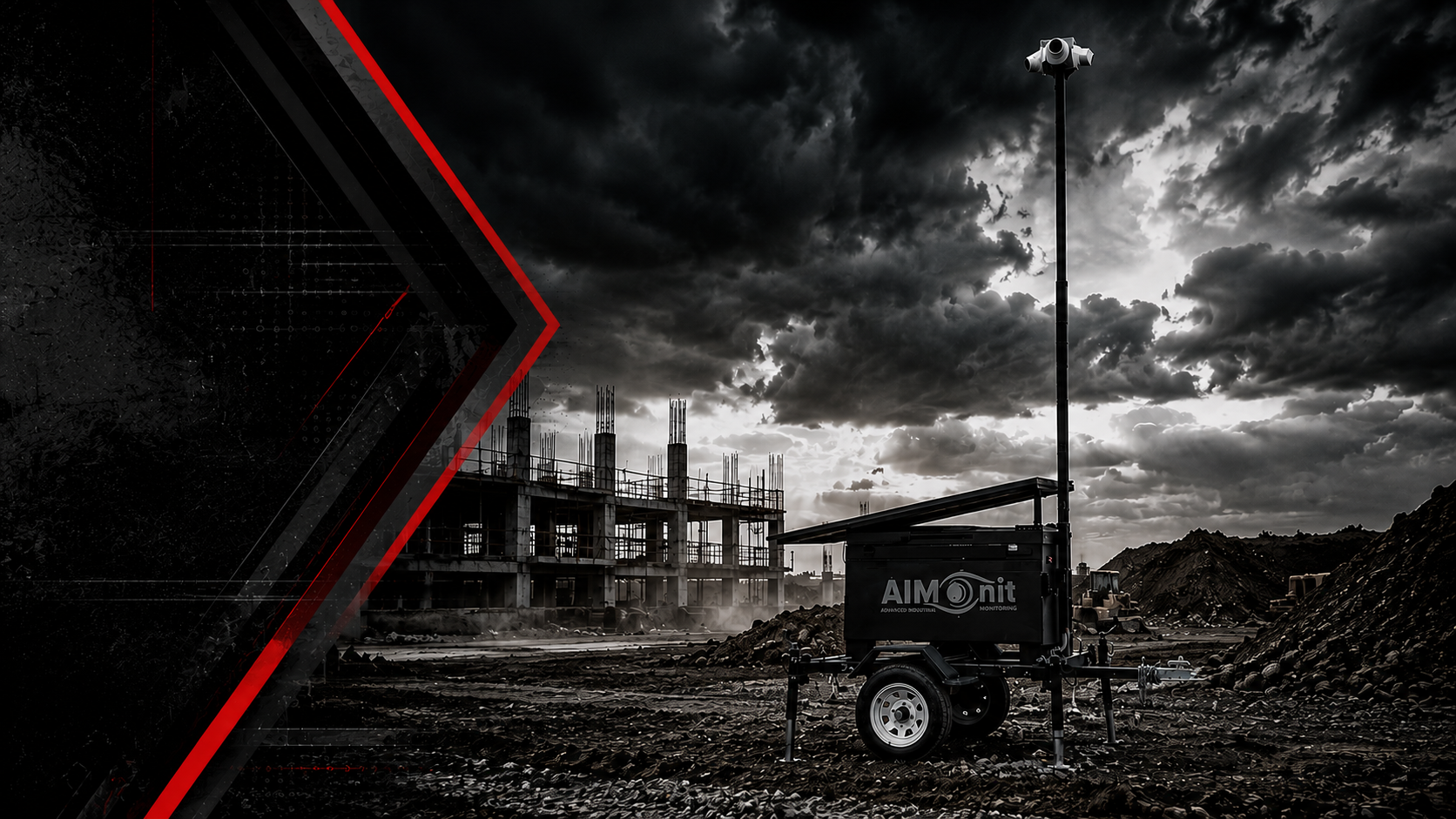
That is one reason mobile cameras for changing jobsites can be useful. As equipment, materials, access points, and active work areas move, surveillance units can be positioned around the areas that currently need protection.
When an incident does happen, the footage gives you a record to work from instead of asking five different people what they remember seeing.
What information can recorded footage provide after an incident?
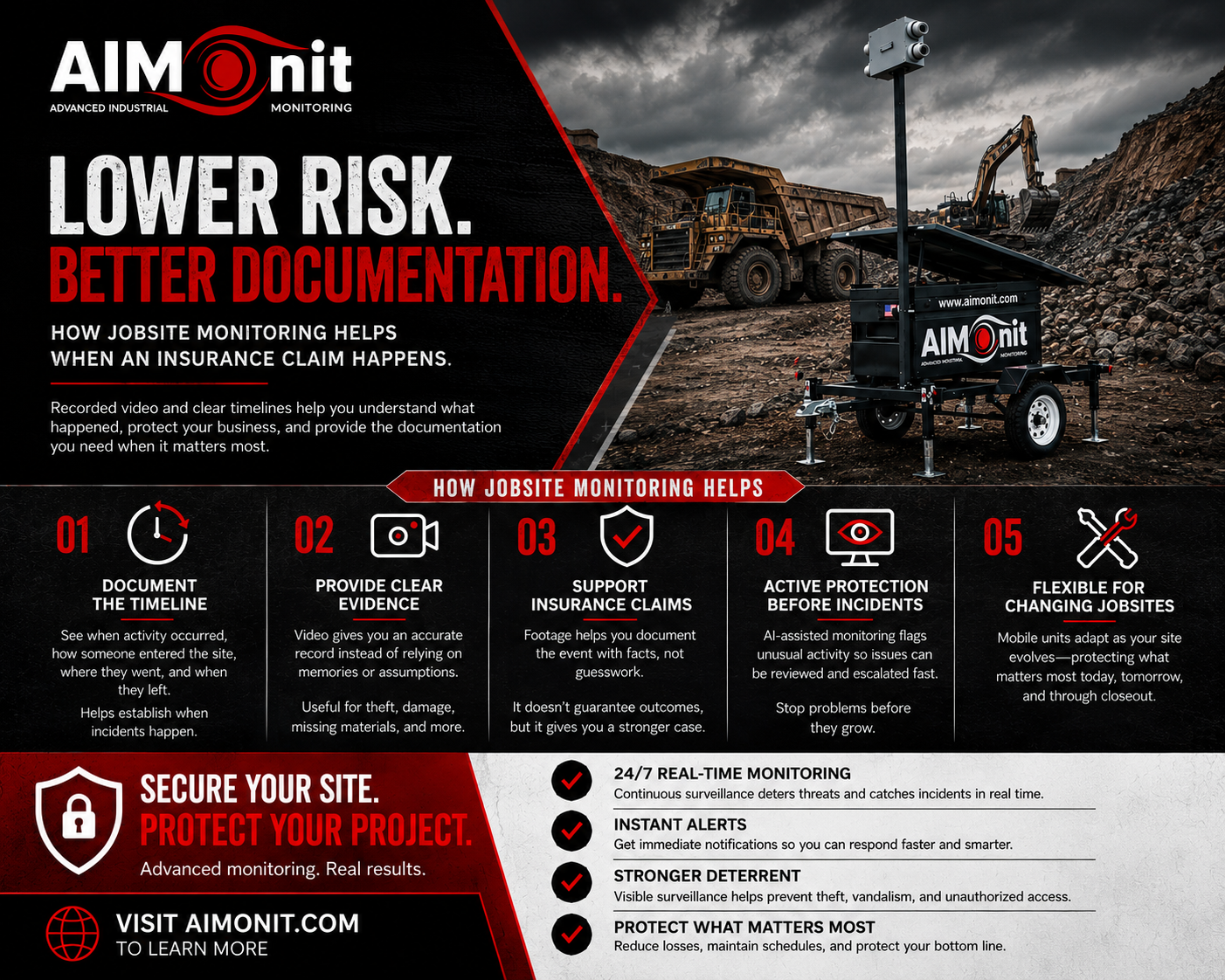
Good video documentation can help establish a timeline.
You may be able to see when a person or vehicle entered the property, which direction they came from, where they went on the site, and what happened before they left. If equipment was damaged, the footage may also help determine when the damage occurred instead of leaving your team trying to narrow it down from an entire weekend.
That information can be useful for more than theft. A project manager may need footage after damaged equipment, missing materials, unauthorized access, or another incident where the company needs to understand what happened.
Advanced Industrial Monitoring includes unlimited free video review, so if something happens and you need help finding the relevant footage, our team can review the recordings and help locate the section you need. You are not left scrolling through hours of video while you are also trying to keep the job moving.
Can monitoring prevent disputes with an insurance company?
No security company should promise that video will prevent an insurance dispute or guarantee that a claim will be approved. Insurance decisions depend on the policy, the incident, the documentation, and the insurer handling the claim.
What monitoring can do is give you a clearer record of the site.
There is a big difference between telling someone that you believe a piece of equipment disappeared sometime between Friday afternoon and Monday morning and having footage that helps establish when activity occurred.
The video does not make the insurance decision. It helps your team document the event with more information than you would have had otherwise.
That distinction matters because after an incident, everybody starts asking questions at once. Ownership wants to know what happened. The project manager is trying to determine what is missing or damaged. Police or investigators may need information, and the insurance company may request documentation. Having footage available gives your team a place to start.
Why does active monitoring matter before a claim ever happens?
Recorded footage is valuable after an incident, but protecting the site should start before you need to pull a recording.
With AI-assisted monitoring, activity can be flagged for review so your monitoring system is doing more than simply creating a record for tomorrow morning. A thoughtful monitoring setup combines technology with human decision-making so unusual after-hours activity can be reviewed and escalated according to the site protocol.
No monitoring system eliminates every risk, and that is not a promise we make. The practical advantage is that you have better visibility into a site during the hours when your regular crews are gone.
That matters on construction projects because a problem that starts overnight does not always stay a security problem. Missing equipment can affect the next shift. Damaged materials can create additional work. A compromised gate can require somebody to stop what they were doing and deal with it before the site gets back to normal.
The sooner you know what happened, the sooner you can make the next decision.
What should contractors look for in jobsite monitoring?
Start with whether the system actually fits the way your project operates.
A construction site does not stay the same from mobilization through closeout. Access changes, equipment moves, material storage shifts, and the areas that need the most protection move with them. Your monitoring setup should be able to adjust without turning every project change into another contract problem.
Advanced Industrial Monitoring offers month-to-month monitoring with no long-term contracts and no hidden costs, which allows protection to change as the project changes.
You should also think about what happens when you actually need the footage. Recording video is only useful if you can get to the part that matters. Unlimited free video review gives Advanced Industrial Monitoring customers another set of eyes when they need to go back and understand an incident.
For contractors thinking about monitoring as part of their overall risk management, that ability to document what happened is worth considering before the day something goes wrong.
Frequently Asked Questions
Can jobsite surveillance footage be used for an insurance claim?
Recorded jobsite footage may provide useful documentation after theft, vandalism, equipment damage, unauthorized access, or another incident. Whether footage is relevant to a particular claim depends on the circumstances and the insurance carrier’s requirements.
Does video monitoring guarantee that an insurance claim will be approved?
No. Advanced Industrial Monitoring does not guarantee claim approval, insurance savings, faster settlements, or any other insurance outcome. Monitoring can provide video documentation that may help establish what happened and when it happened.
Does Advanced Industrial Monitoring charge customers to review footage after an incident?
Advanced Industrial Monitoring provides unlimited free video review. If equipment is damaged, materials are missing, or you need to understand activity from a particular time period, Advanced Industrial Monitoring can help review the available footage and locate the relevant recording.
Can Advanced Industrial Monitoring monitor activity instead of only recording it?
Yes. Advanced Industrial Monitoring offers AI-assisted monitoring that can flag activity for review, along with human monitoring and response support. This gives contractors a more active approach than relying only on cameras that record an incident for someone to discover later.
Advanced Industrial Monitoring serves job sites across the entire East Coast of the US and the Caribbean, including New York, New Jersey, Pennsylvania, Delaware, Maryland, Washington, D.C., West Virginia, Virginia, North Carolina, South Carolina, Georgia, Tennessee, and Puerto Rico.
Get in touch with Advanced Industrial Monitoring for a quick demo, and we’ll figure out the right coverage for your site and your budget.
For our services in the Midwest and West Coast, please visit our sister company Jobsite Sentry at jobsitesentry.com.