



MONTH-TO-MONTH VS. LONG-TERM CONTRACTS: WHY FLEXIBILITY MATTERS IN CONSTRUCTION

Reading time: 5–6 minutes
By Jennifer, CEO of Advanced Industrial Monitoring. Jennifer has over 10 years of experience helping contractors protect construction sites, industrial facilities, equipment yards, and remote projects. She writes about construction site security, remote surveillance, AI-assisted monitoring, and practical ways to reduce risk while improving visibility across active job sites.
When you’re choosing a jobsite monitoring provider, it’s easy to compare the monthly price or focus on the length of the contract. A long-term agreement can feel like the safer choice because it promises predictable costs and one less decision to make.
The reality is that construction projects rarely stay on the original schedule. Weather delays, permitting issues, changing scopes, and subcontractor availability all affect how a project moves from one phase to the next. If your monitoring agreement cannot adapt as those conditions change, you’re paying for a plan that no longer matches the way your site is operating. It’s one reason remote oversight helps keep projects moving even when schedules change, instead of leaving project teams reacting to delays after they’ve already affected the schedule.
Why don’t long-term contracts fit the way construction projects actually work?
Construction projects are constantly evolving. Even the best-planned jobs rarely move from groundbreaking to completion without adjustments.
One phase may have expensive equipment spread across the property, daily material deliveries, and multiple trades working at once. A few weeks later, activity may slow while crews wait for inspections, utility work, or revised plans. Then everything ramps back up again when new crews arrive and additional work areas open.
Every one of those changes affects what needs to be protected.
A monitoring agreement built around a fixed timeline assumes the project will unfold exactly as planned. Anyone who has managed a construction site knows that almost never happens.
Protecting a jobsite isn’t about following a calendar. It’s about responding to the conditions on the site today.
What happens when your monitoring contract can’t adjust?
Most long-term contracts are designed around consistency, but construction work isn’t consistent.
Imagine a project that’s expected to last nine months. Halfway through, permitting delays push the schedule back another three months. The site sits mostly inactive while everyone waits for approvals, but you’re still paying for the same monitoring arrangement because the contract leaves little room to make changes.
The opposite situation happens just as often.
A project moves ahead of schedule, or another section of the property opens sooner than expected. Suddenly there are new storage areas, equipment, or temporary access points that need protection. Instead of adjusting your monitoring, you’re dealing with contract limitations, additional charges, or unnecessary paperwork.
Those situations are part of construction.
When your monitoring provider can’t adapt as quickly as your project changes, the contract becomes another issue that has to be managed instead of helping protect the site.
Why does month-to-month monitoring make more sense?
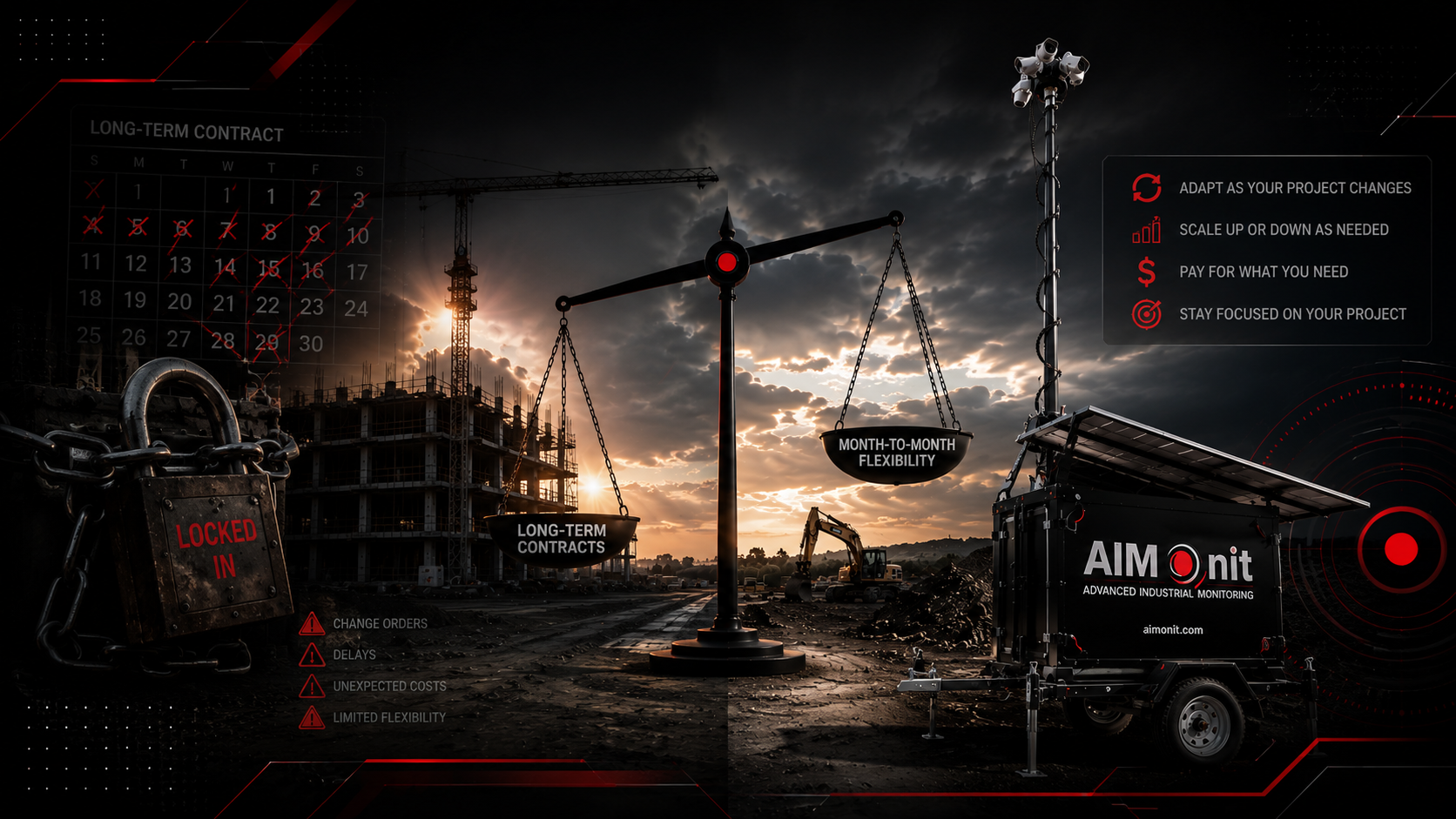
A month-to-month agreement follows the way construction projects actually work instead of forcing construction to fit a contract.
As activity increases, monitoring can increase with it. When work slows down, protection can be adjusted to match the current level of risk. If the layout changes, your monitoring can move right along with it.
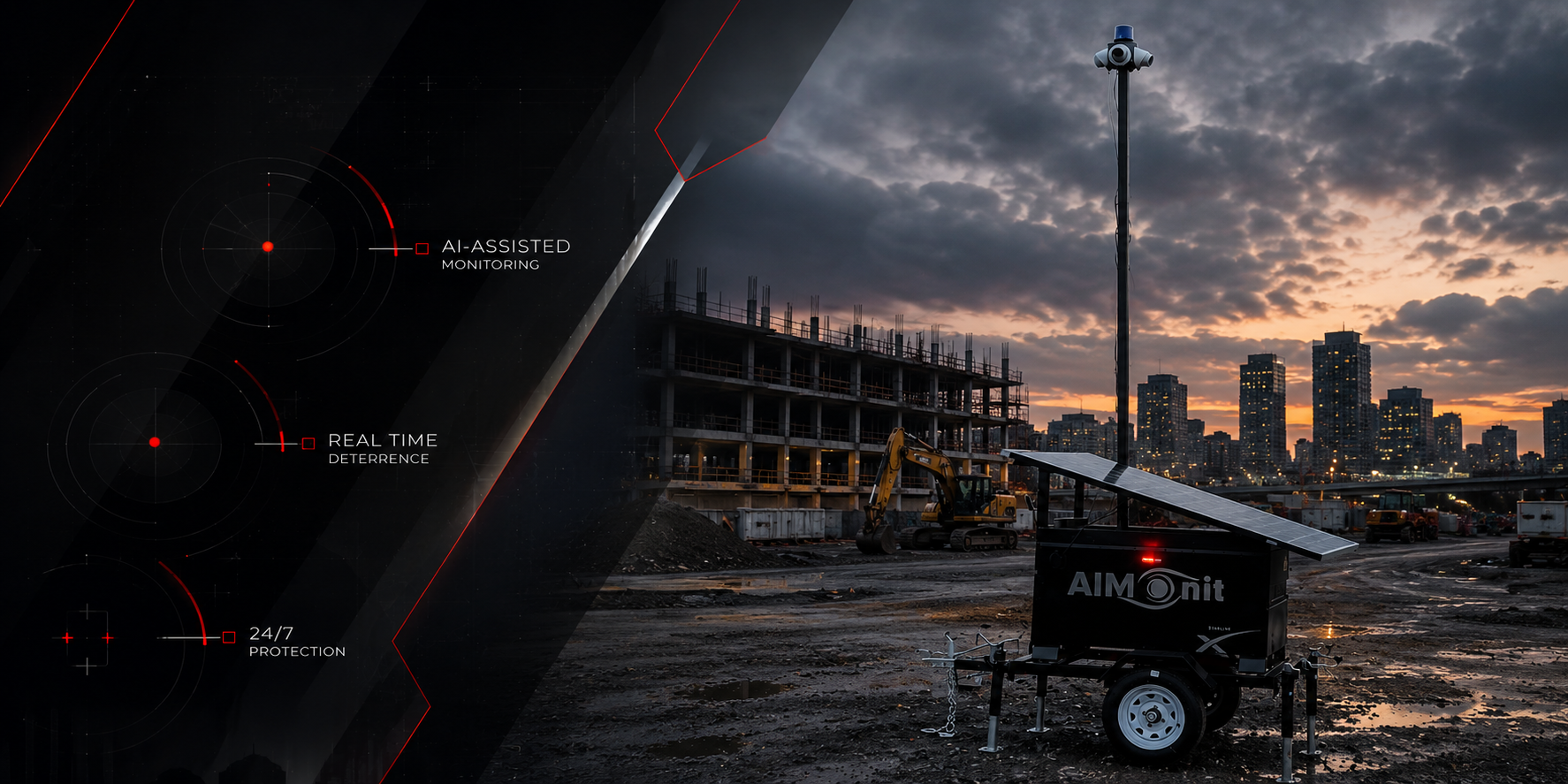
That flexibility is one reason many contractors choose mobile surveillance systems that can be repositioned as the job progresses instead of relying on equipment that stays fixed in one location.
Project managers make better decisions when they’re responding to what’s happening today instead of trying to stick with assumptions made months earlier.
Anyone who has spent time in construction knows that predicting every change before work begins simply isn’t realistic.
Does flexibility actually help control costs?
Many contractors compare monitoring providers by looking only at the monthly price. That’s understandable, but it doesn’t tell the whole story.
A better question is whether you’re paying for protection that matches what’s happening on your site.
If your project slows down because of weather or permitting delays, paying for services that no longer fit the job doesn’t help your budget. On the other hand, if work expands and your monitoring can’t expand with it without penalties or contract changes, you’re paying for the agreement instead of paying for protection.
Month-to-month service helps keep monitoring aligned with the project instead of locking you into decisions that were made before anyone knew how the work would actually unfold.
For many contractors, that makes budgeting simpler because monitoring becomes something you adjust alongside the project rather than another fixed expense that ignores changing conditions.
How does flexibility make managing a jobsite easier?
Construction projects already require constant coordination.
Project managers spend their days scheduling subcontractors, coordinating deliveries, handling inspections, solving unexpected problems, and keeping work moving. Security shouldn’t become another administrative task that competes for your attention.
When your monitoring provider can respond quickly, you’re not spending time renegotiating contracts every time the project changes direction.
If a new laydown yard opens, protection can expand with it. If equipment moves across the site, monitoring can move where the risk has moved. Projects that require cameras to relocate several times during construction often benefit from mobile surveillance units that are designed to move with the job instead of staying permanently installed.
Many contractors also discover that changing project schedules can make traditional guard staffing difficult to manage. As sites expand, contract, or move into different phases, staffing needs change too, and security guard turnover can quietly increase costs while reducing consistency on the jobsite.
That flexibility allows you to spend more time managing construction instead of managing your monitoring contract.
Choosing a monitoring model that matches the way construction really works
Every construction project changes.
Some finish early. Others deal with weather delays, permit issues, design revisions, or shifting priorities. Those situations aren’t unusual. They’re part of construction, which means your monitoring strategy should be able to adapt right alongside the project.
A flexible month-to-month approach allows protection to change as your site changes instead of leaving you tied to assumptions that stopped being accurate weeks ago.
Some projects also face another challenge. They’re built in locations where commercial power or dependable cellular service isn’t available yet, making Starlink surveillance a practical option for protecting remote job sites without traditional infrastructure.
The goal isn’t simply to spend less money. It’s to make sure your monitoring continues protecting the site from the first day of construction until the project is complete, no matter how many changes happen along the way.
AIM serves job sites across the entire East Coast of the US and the Caribbean, including New York, New Jersey, Pennsylvania, Delaware, Maryland, Washington, D.C., West Virginia, Virginia, North Carolina, South Carolina, Georgia, Tennessee, and Puerto Rico.
Get in touch with Advanced Industrial Monitoring for a quick quote, and we’ll figure out the right coverage for your site and your budget.
For our services in the Midwest and West Coast, please visit our sister company Jobsite Sentry at jobsitesentry.com.
FAQ
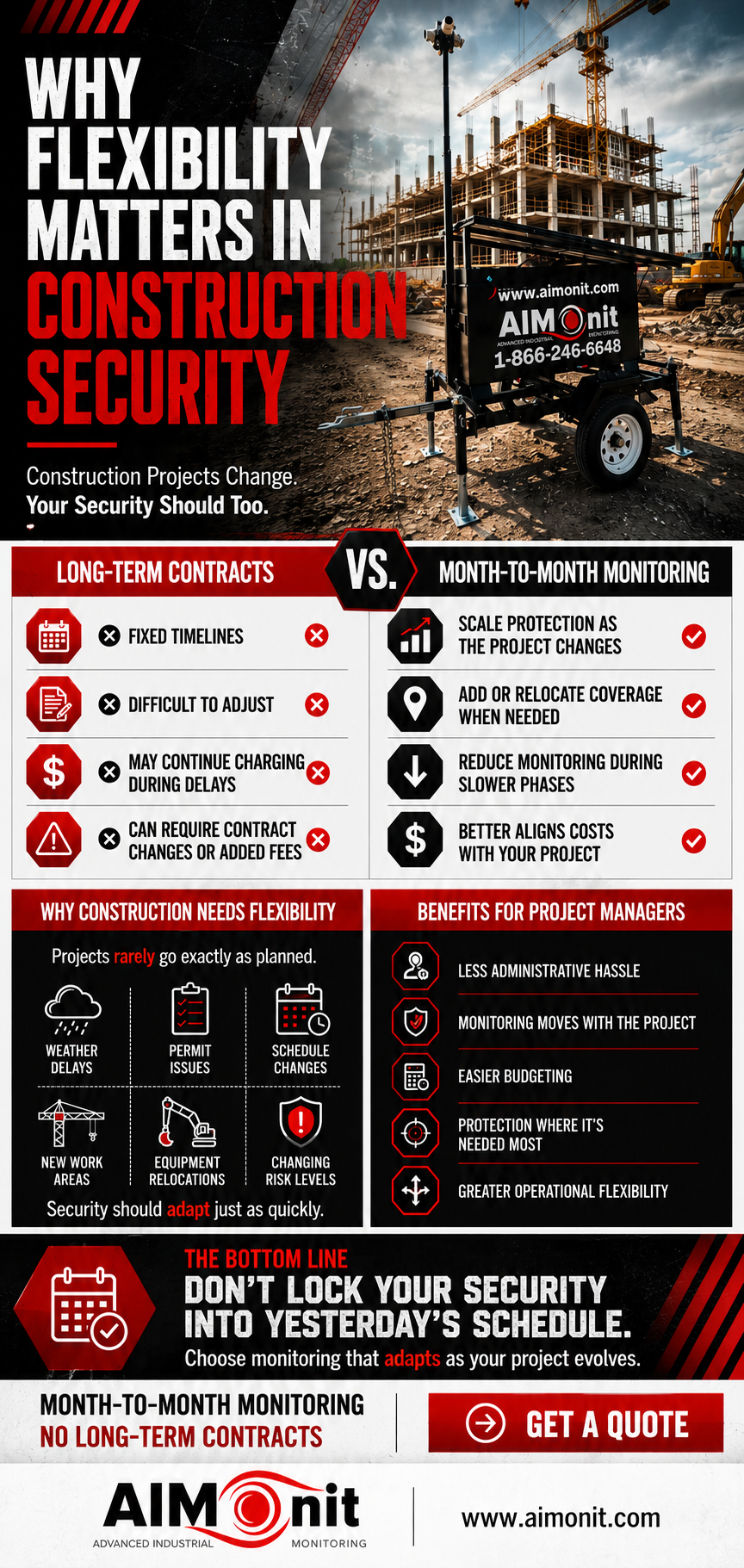
Is month-to-month monitoring more expensive than a long-term contract? Not necessarily. While some long-term contracts advertise a lower monthly rate, they can become more expensive if your project changes and you’re paying for services you no longer need or additional fees to adjust your monitoring.
Can monitoring be adjusted as construction phases change? Yes. Month-to-month service makes it easier to increase, reduce, or relocate monitoring as equipment, materials, and work areas change throughout the life of the project.
Why do construction projects benefit from flexible monitoring? Construction schedules change because of weather, inspections, permitting, subcontractor availability, and scope changes. Flexible monitoring allows your security plan to change with the project instead of remaining tied to the original schedule.
Does Advanced Industrial Monitoring require long-term contracts? No. Advanced Industrial Monitoring offers month-to-month service with no long-term contracts and no hidden costs, giving contractors the flexibility to adjust protection as their projects evolve.